
Compare your VITALS profile with one other person's
The comparison shows where the two of you are alike, where you differ, and which situations keep coming up between you, with something to try for each. You both see the same results.
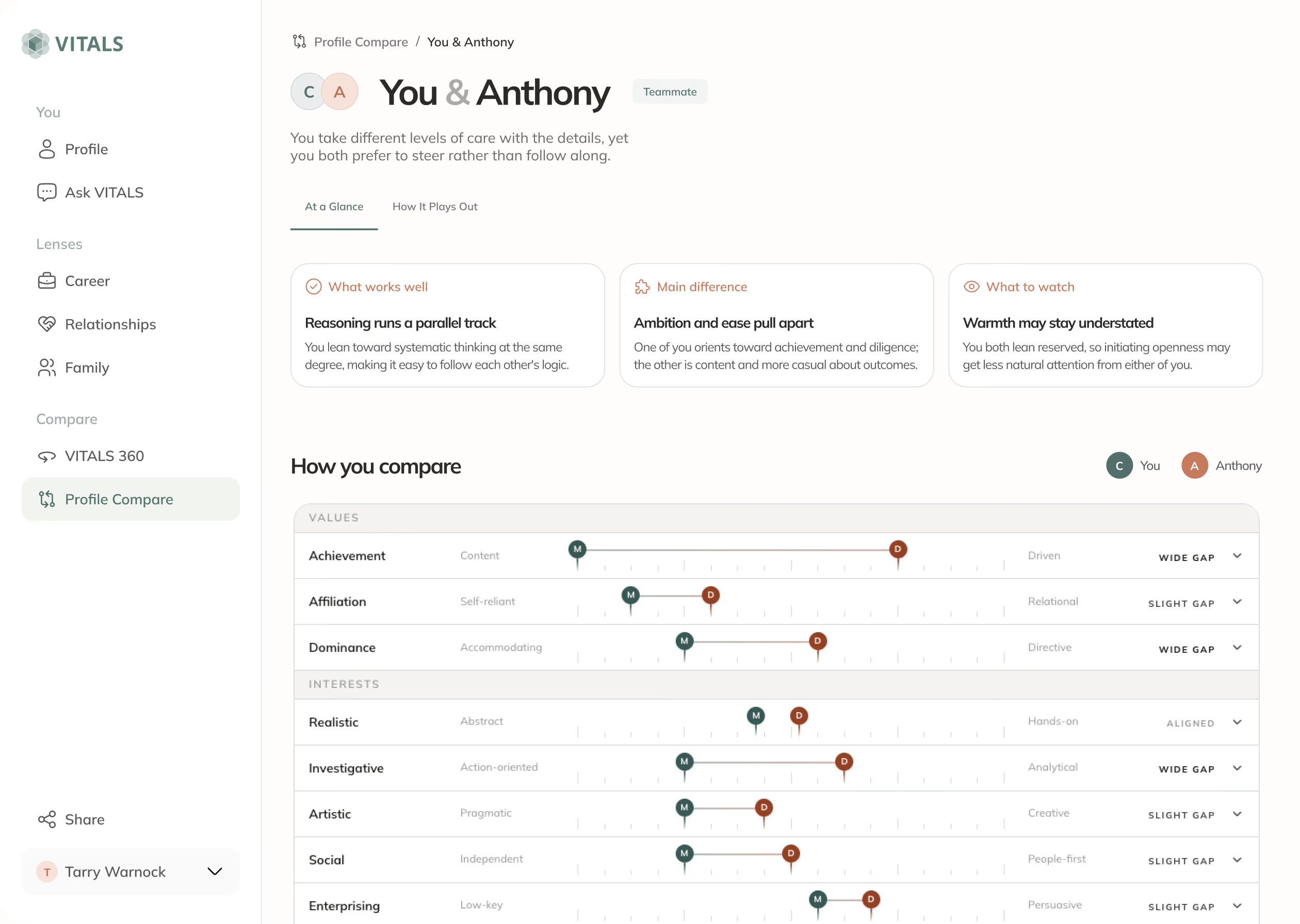


Guidance that starts from who you both are
Relationship advice is written for everyone. It doesn't know your personality or theirs, so it can't say why the same argument keeps starting the same way.
A comparison starts from measurement instead. You've each answered the same 291-question assessment, and the comparison is built from those two measured profiles. That's enough to describe, specifically, what happens when your two personalities meet. The disagreement that always starts the same way. The plan one of you makes and the other reworks.
The comparison is scoped to the relationship you actually have. You tell it whether you're partners, friends, teammates, or family, and the questions and results fit that. Colleagues don't get couples content.
A comparison starts from measurement instead. You've each answered the same 291-question assessment, and the comparison is built from those two measured profiles. That's enough to describe, specifically, what happens when your two personalities meet. The disagreement that always starts the same way. The plan one of you makes and the other reworks.
The comparison is scoped to the relationship you actually have. You tell it whether you're partners, friends, teammates, or family, and the questions and results fit that. Colleagues don't get couples content.
What's in a Profile Comparison
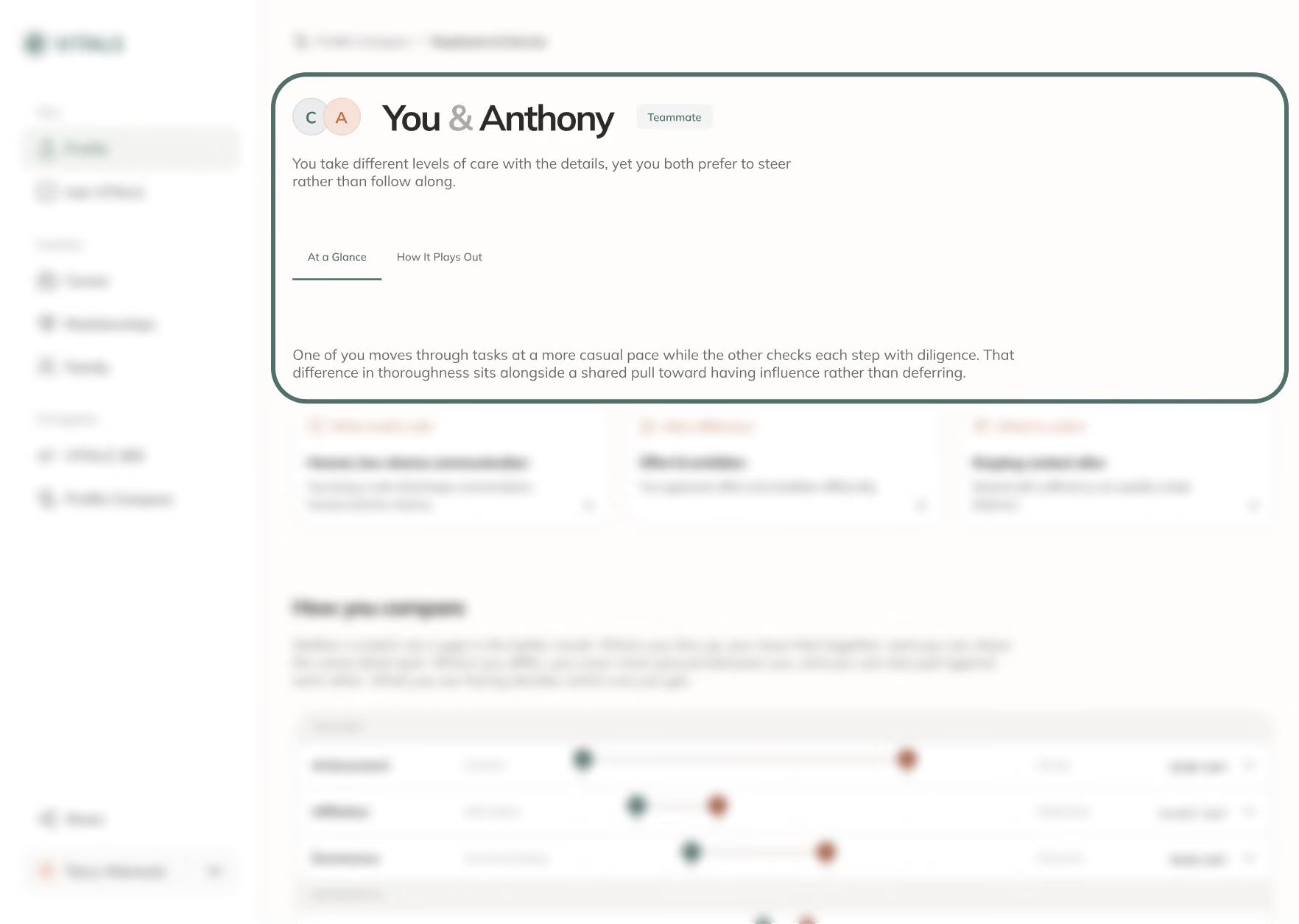
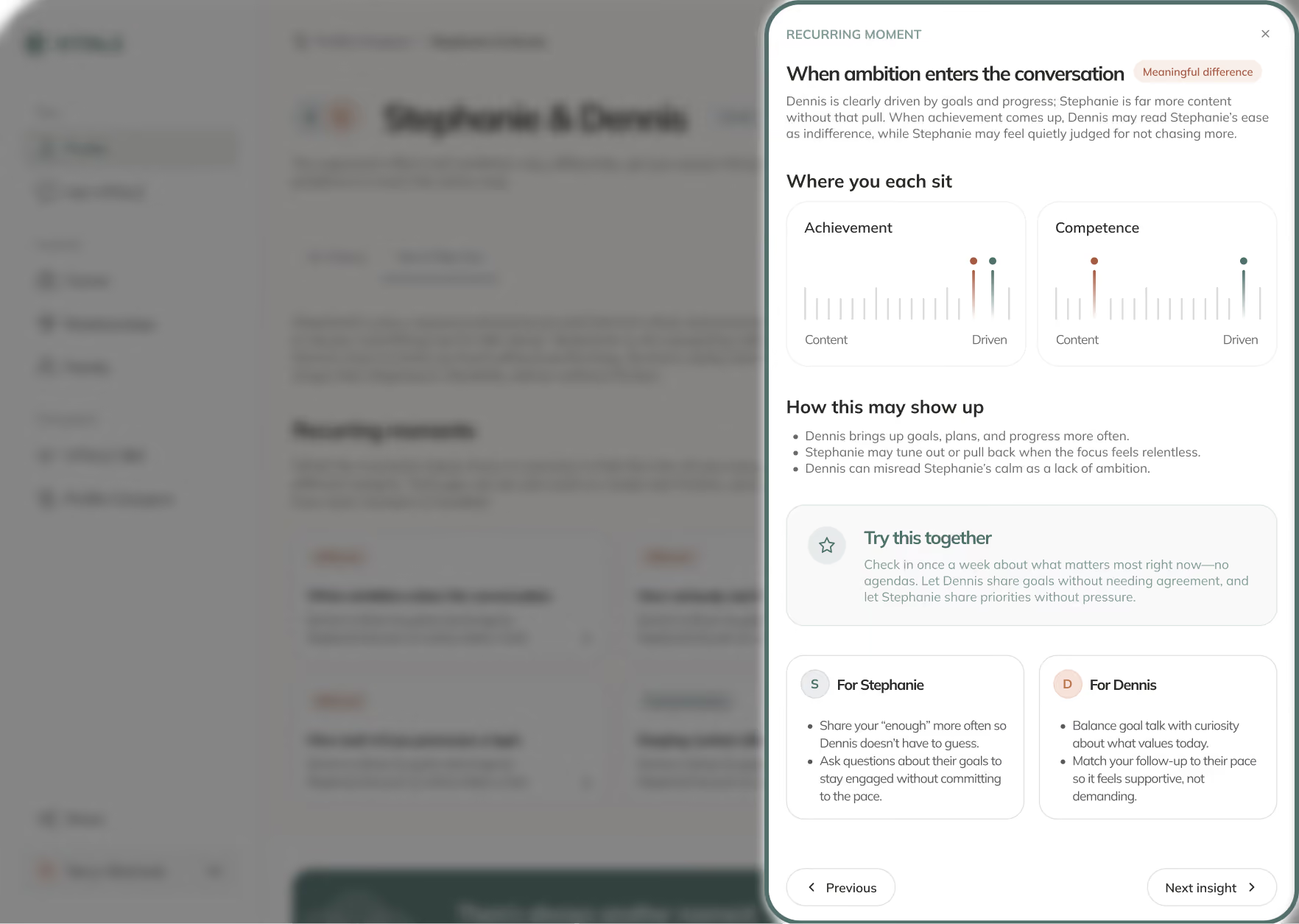
What differs, what complements
The comparison opens with what's genuinely different between your two profiles and what you share. The rest of the results build on it.
Your strongest signal
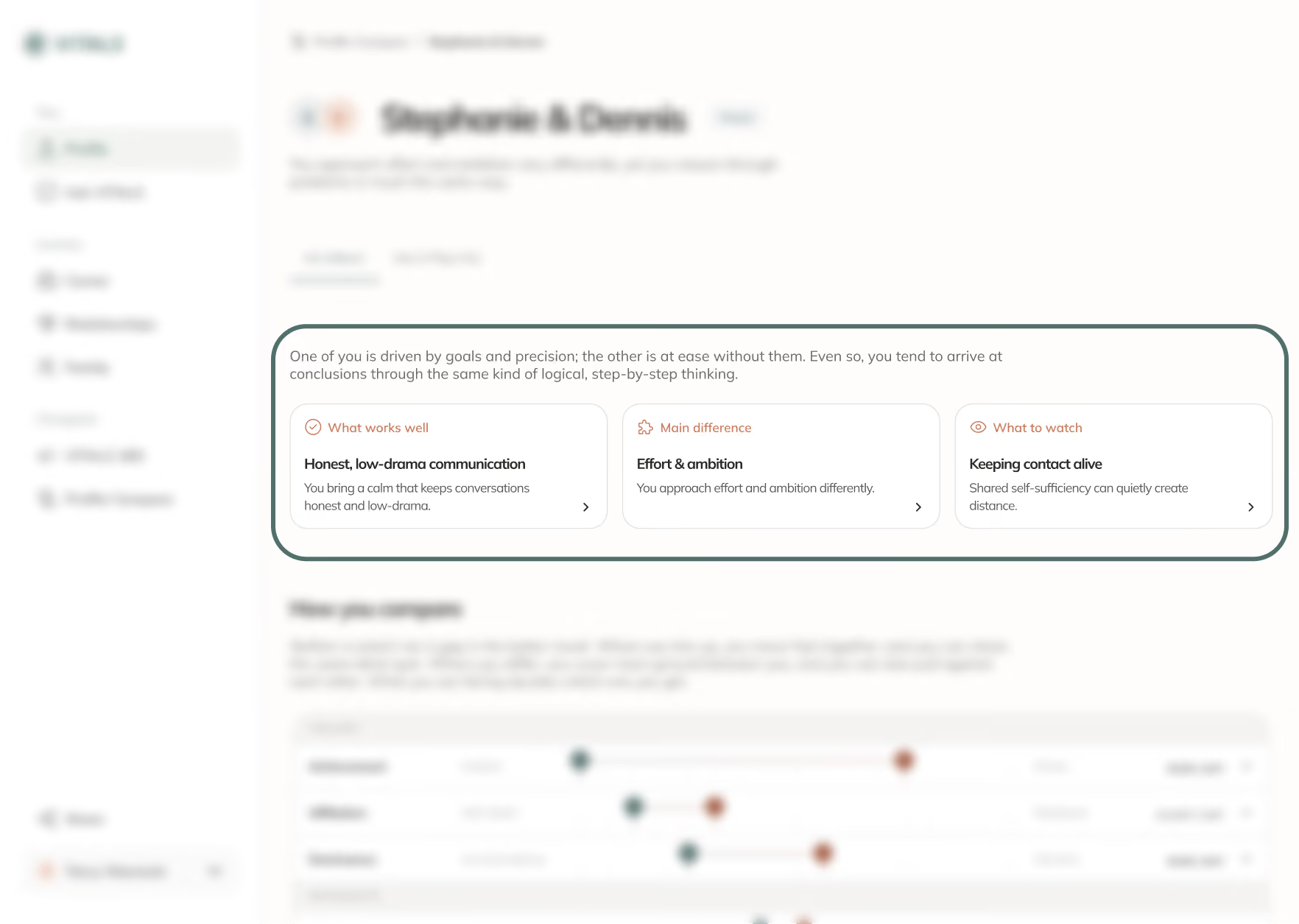
Six cards summarize the comparison: your strongest alignment, your biggest difference, and a hidden challenge. If you read nothing else, read these.
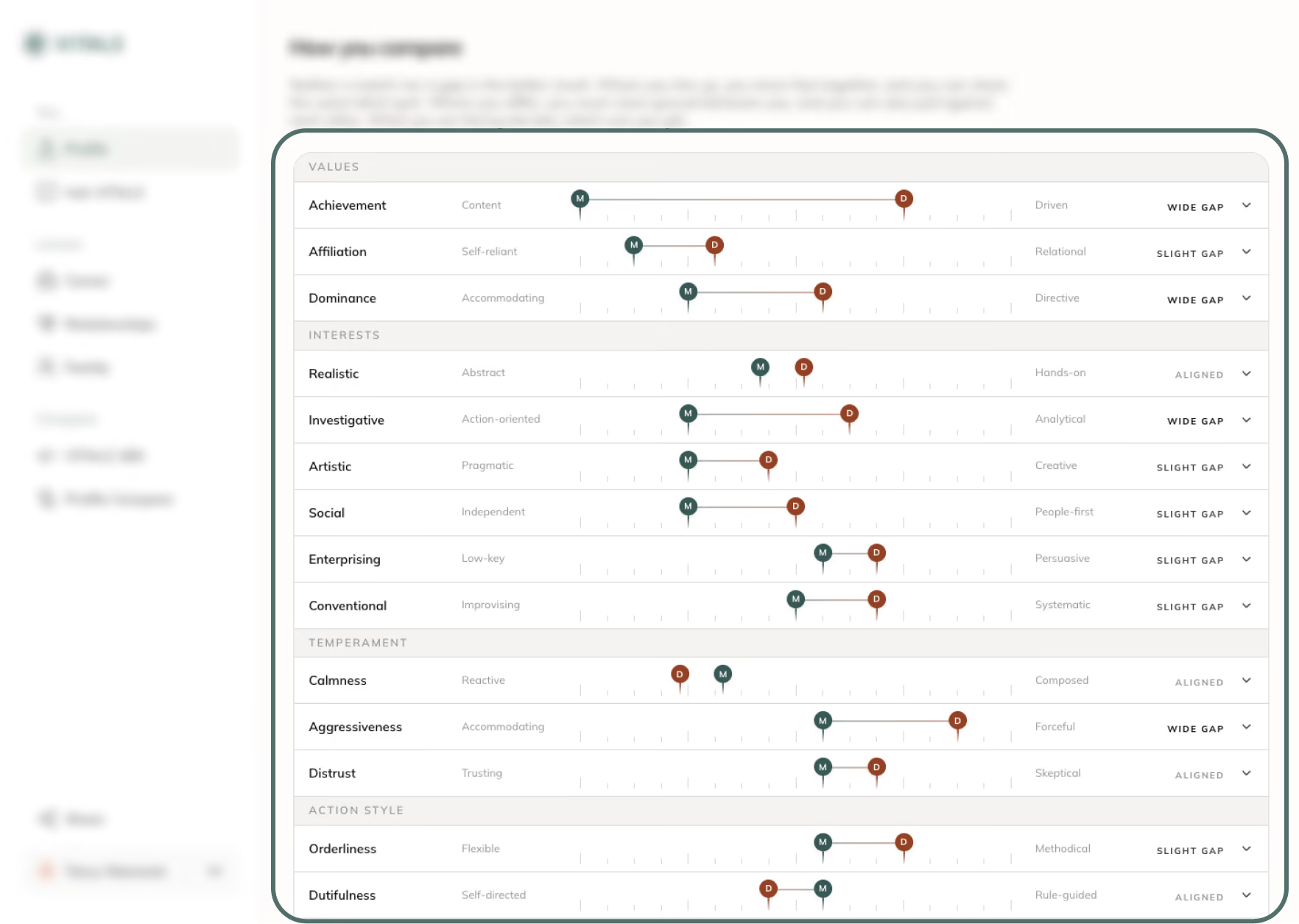
All the traits, in one place
Every measured trait appears here, grouped under the six VITALS dimensions. The scale shows where each person lands between two opposite ways of being. Neither is better. They're just different. The value is in the awareness.
Six patterns, with something to try
Six patterns that show up between you, pulled from your two profiles. Each one lists what tends to happen, one thing to try together, and one thing each of you can do alone.
Ask VITALS can use the comparison too.
If something between you isn't covered here, ask about it there.

How it starts

Invite one person

They accept, or nothing happens

Answer a few questions, get the results

Put it to work

It grows with you
What a comparison shows you

Partners
Clarity:
If you've always called each other opposites, the comparison shows where you're actually alike, like shared values, and which differences put you at odds.

Friends
Clarity:
See what has kept the friendship going and where you two read the same situation differently, so the next hard conversation starts from understanding.

Teammates
Clarity:
See where your work styles line up and where they collide, so you can tell which disagreements are about the work and which are about how you each operate.

Family
Clarity:
A parent, sibling, or grown child: the comparison shows where you're alike and where you aren't, so the patterns you've lived with for years have an explanation.

Partners
Clarity:
If you've always called each other opposites, the comparison shows where you're actually alike, like shared values, and which differences put you at odds.

Friends
Clarity:
See what has kept the friendship going and where you two read the same situation differently, so the next hard conversation starts from understanding.

Teammates
Clarity:
See where your work styles line up and where they collide, so you can tell which disagreements are about the work and which are about how you each operate.

Family
Clarity:
A parent, sibling, or grown child: the comparison shows where you're alike and where you aren't, so the patterns you've lived with for years have an explanation.
What a comparison
never includes

No score
There is no compatibility result, no percentage match. What you see is who you are.

No verdict
It never says whether two people suit each other, only where they sit. It describes what happens between you. The conclusions are yours.

No inflated gaps
The labels match the size of the difference. A small gap is called slight, and a genuinely small one isn't called a difference at all.

Nothing beyond the comparison
A comparison is a shared report. You see what they see. The rest of your VITALS experience and content stays private to you.
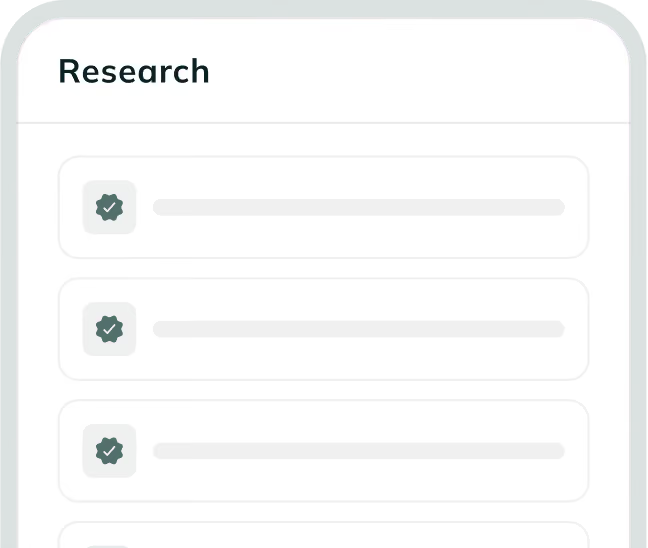
Built for precision, not simplicity. Why you can trust what you see
Validated science
Built on validated psychology frameworks, including Jungian typology, Cattell's 16 Personality Factors, and Holland's interest themes.
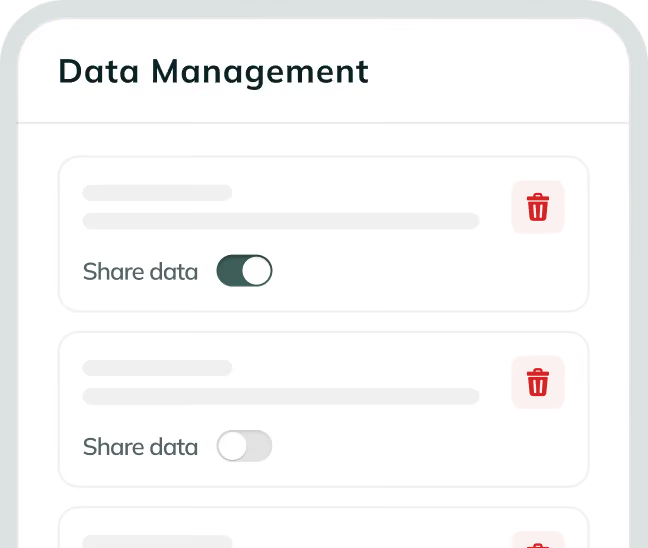
Your data stays yours
Export it or delete it any time you want. You decide what gets shared and with whom, and it's never sold.
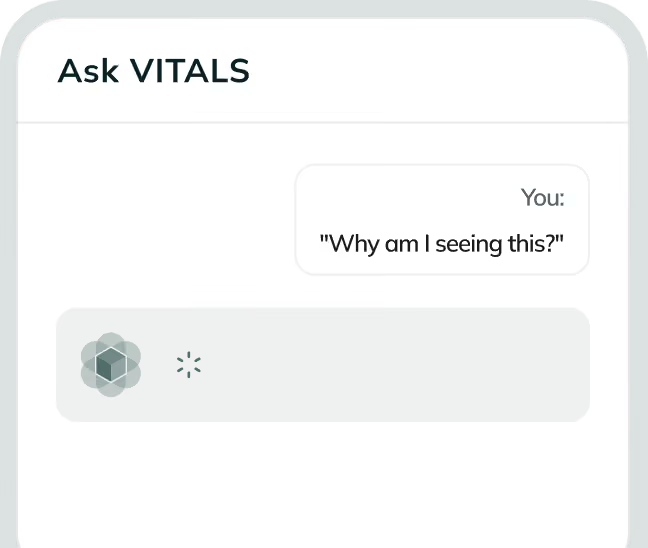
No black box
Every insight shows its work. Ask "Why am I seeing this?" and you get the actual reasoning: the science sets the pattern, the AI only puts it into words.
You stay in charge
VITALS surfaces patterns and lays out possibilities. It doesn't hand you a verdict, and it isn't built to keep you scrolling. You own your decisions.
Validated science
Built on validated psychology frameworks, including Jungian typology, Cattell's 16 Personality Factors, and Holland's interest themes.
Your data stays yours
Export it or delete it any time you want. You decide what gets shared and with whom, and it's never sold.
No black box
Every insight shows its work. Ask "Why am I seeing this?" and you get the actual reasoning: the science sets the pattern, the AI only puts it into words.
You stay in charge
VITALS surfaces patterns and lays out possibilities. It doesn't hand you a verdict, and it isn't built to keep you scrolling. You own your decisions.
See yourself clearly. Then decide.
It starts with the assessment: about 20 minutes, built on validated psychology, and a living profile that's yours to keep.
Questions worth answering before you start
Who's behind the science?
VITALS is built on established psychological science. Your assessment draws from validated frameworks including Jungian typology, Cattell's 16 Personality Factors, and Holland's vocational interest themes, research lineages that span decades. Your answers are scored deterministically against these validated patterns. AI is used only to put the results into language you can use.
Is this just another personality quiz?
No. A quiz sorts you into a type. VITALS asks 291 questions and never reads any of them on their own: your answers pool into 87 clusters, get scored against population norms, and resolve into six dimensions. What comes out isn't a category. It's a detailed picture of how you think, decide, and act, precise enough to guide a real decision.
What happens to my data?
Your data stays yours. Export it or delete it any time, control exactly what gets shared and with whom, and it's never sold. It lives in VITALS' own systems, not inside an AI company's training set.
How does VITALS decide what to show me?
The scoring itself is deterministic: your answers are matched against validated patterns from decades of data, no AI involved. Where we use AI is to put those patterns into language you can understand. Every insight comes with a "Why am I seeing this?" that shows you exactly where it came from. Want to know more? Just use Ask VITALS and dig in.
Does VITALS tell me what to do?
No, and that's on purpose. We show you the patterns, the tradeoffs, and why certain paths tend to fit people who work the way you do. We'll make suggestions and we'll always show the reasoning, but the decision stays yours. We're all looking for answers. The ones worth having aren't generic. They match who you are and the life you're actually living.
How is this different from ChatGPT?
ChatGPT is trained on everyone, so its answers are generic by design. It's built to predict the most likely answer, not to know what makes sense for you. VITALS starts by measuring who you are, then uses that profile as the context for every insight. Because it knows you, it can say more with less: the difference between advice for people like you and advice that's actually about you.
What does it cost?
Starting is free, and free means a real profile, not a teaser: you see yourself clearly before anyone asks you for anything. When you're ready for more there's one paid plan, with clear pricing shown up front and nothing you're locked into.