
Six dimensions, read together. A model that holds your contradictions.
Values, Interests, Temperament, Action Style, Learning Style, and Social Style. VITALS measures all six and reads them against each other. That second step is where the picture gets specific enough to act on.

Why six, and why one is never enough

Most tools that claim to explain you pick one thing and stop

Type systems trade detail for a label

A quiz describes you once and leaves it there
Most tools that claim to explain you pick one thing and stop
Type systems trade detail for a label
A quiz describes you once and leaves it there
Six dimensions.

Values
What drives your choices and makes work meaningful

Interests
What you're drawn to and energized by over time

Temperament
Your emotional patterns, energy, and stress responses

Action Style
How you approach tasks and get things done

Learning Style
How you take in and integrate new information

Social Style
How you communicate, collaborate, and build relationships
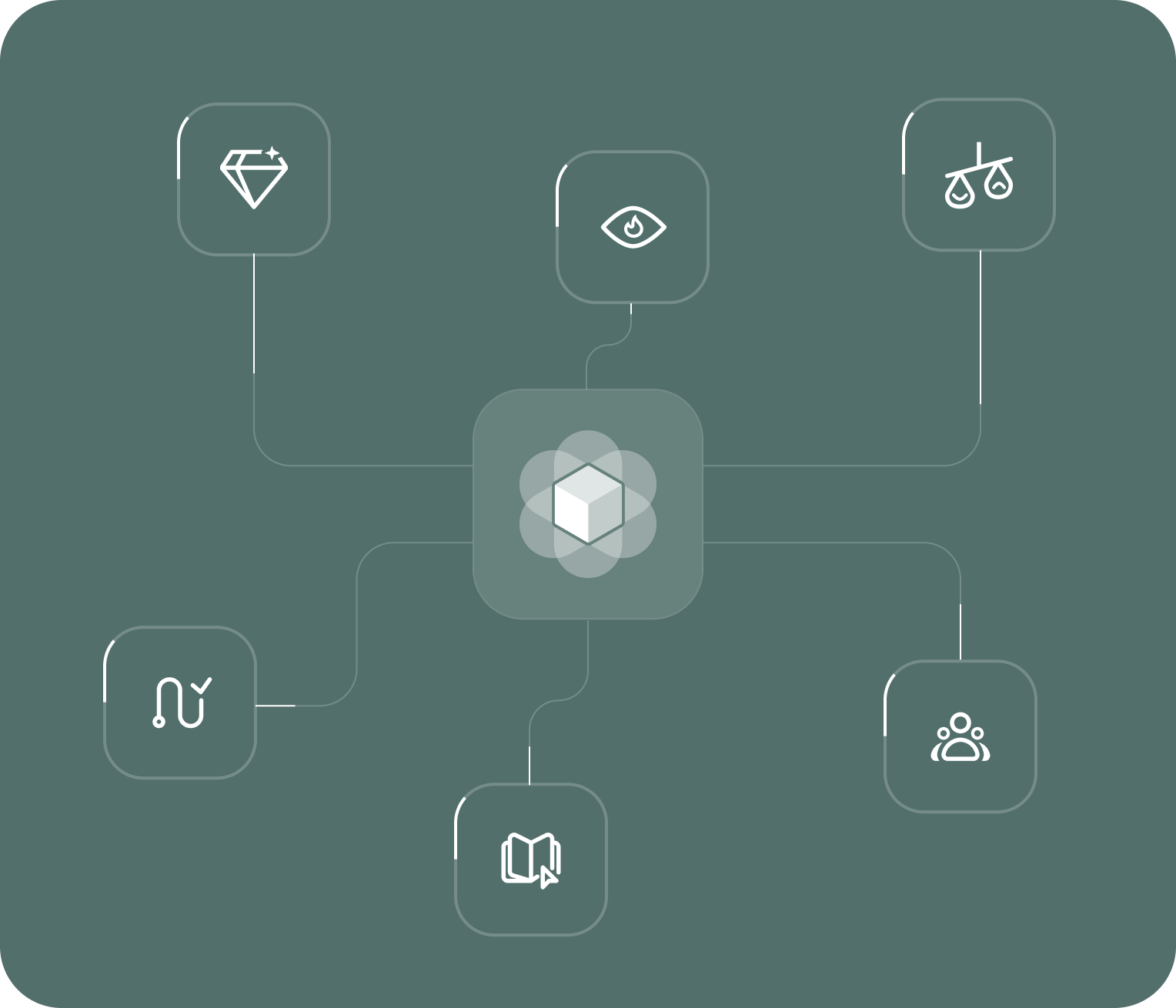
Two dimensions explain more than six separate scores.
A single dimension describes a tendency. Read two together and you get a person. Say your investigative interests run high and your sense of urgency runs low. Separately those are two numbers. Together they explain why your best thinking happens when nobody is rushing you, and why a high-pressure role would wear on you.
The same reading works across all six. Someone who values autonomy and has a collaborative social style is not a contradiction. That person needs room to decide and energy from the people around them. Name both and the tension becomes something you can plan around.
This is why VITALS reads patterns. A label hands you a category and asks you to fit it. A pattern moves when you move. It holds the parts of you that don't agree and gives you something to decide with.
Two dimensions explain more than six separate scores.
A single dimension describes a tendency. Read two together and you get a person. Say your investigative interests run high and your sense of urgency runs low. Separately those are two numbers. Together they explain why your best thinking happens when nobody is rushing you, and why a high-pressure role would wear on you.
The same reading works across all six. Someone who values autonomy and has a collaborative social style is not a contradiction. That person needs room to decide and energy from the people around them. Name both and the tension becomes something you can plan around.
This is why VITALS reads patterns. A label hands you a category and asks you to fit it. A pattern moves when you move. It holds the parts of you that don't agree and gives you something to decide with.
Built for precision, not simplicity. Why you can trust what you see
Validated science
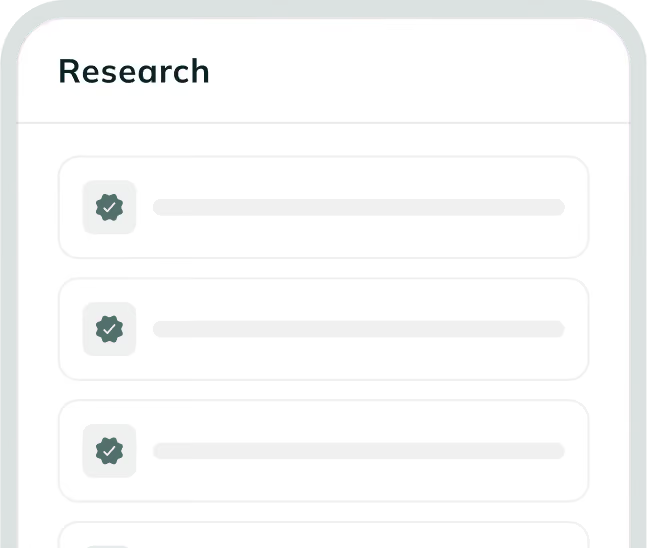
Built on validated psychology frameworks, including Jungian typology, Cattell's 16 Personality Factors, and Holland's interest themes.
Your data stays yours
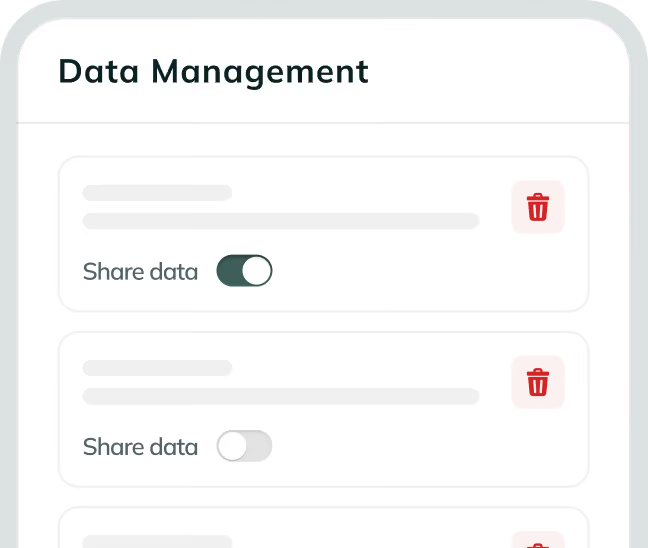
Export it or delete it any time you want. You decide what gets shared and with whom, and it's never sold.
No black box
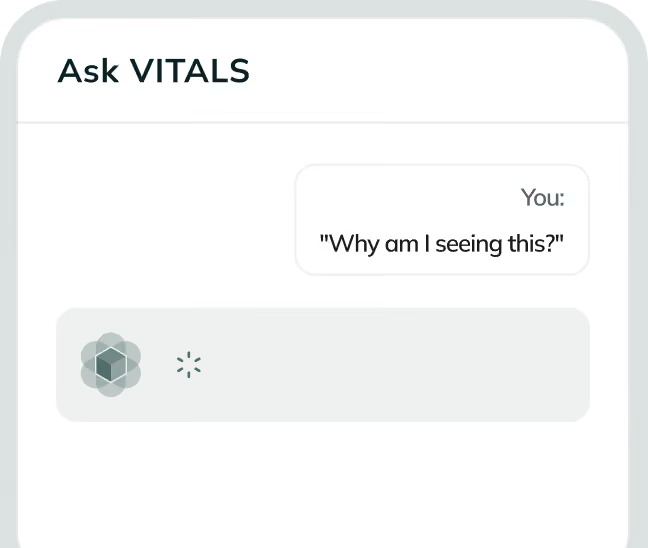
Every insight shows its work. Ask "Why am I seeing this?" and you get the actual reasoning: the science sets the pattern, the AI only puts it into words.
You stay in charge
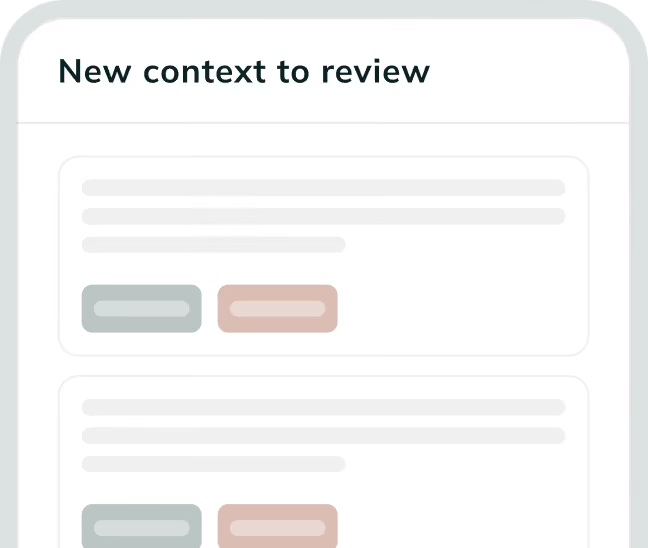
VITALS surfaces patterns and lays out possibilities. It doesn't hand you a verdict, and it isn't built to keep you scrolling. You own your decisions.
Validated science
Built on validated psychology frameworks, including Jungian typology, Cattell's 16 Personality Factors, and Holland's interest themes.
Your data stays yours
Export it or delete it any time you want. You decide what gets shared and with whom, and it's never sold.
No black box
Every insight shows its work. Ask "Why am I seeing this?" and you get the actual reasoning: the science sets the pattern, the AI only puts it into words.
You stay in charge
VITALS surfaces patterns and lays out possibilities. It doesn't hand you a verdict, and it isn't built to keep you scrolling. You own your decisions.
See yourself clearly. Then decide.
It starts with the assessment: about 20 minutes, built on validated psychology, and a living profile that's yours to keep.

Questions worth answering before you start
Who's behind the science?
VITALS is built on established psychological science. Your assessment draws from validated frameworks including Jungian typology, Cattell's 16 Personality Factors, and Holland's vocational interest themes, research lineages that span decades. Your answers are scored deterministically against these validated patterns. AI is used only to put the results into language you can use.
Is this just another personality quiz?
No. A quiz sorts you into a type. VITALS asks 291 questions and never reads any of them on their own: your answers pool into 87 clusters, get scored against population norms, and resolve into six dimensions. What comes out isn't a category. It's a detailed picture of how you think, decide, and act, precise enough to guide a real decision.
What happens to my data?
Your data stays yours. Export it or delete it any time, control exactly what gets shared and with whom, and it's never sold. It lives in VITALS' own systems, not inside an AI company's training set.
How does VITALS decide what to show me?
The scoring itself is deterministic: your answers are matched against validated patterns from decades of data, no AI involved. Where we use AI is to put those patterns into language you can understand. Every insight comes with a "Why am I seeing this?" that shows you exactly where it came from. Want to know more? Just use Ask VITALS and dig in.
Does VITALS tell me what to do?
No, and that's on purpose. We show you the patterns, the tradeoffs, and why certain paths tend to fit people who work the way you do. We'll make suggestions and we'll always show the reasoning, but the decision stays yours. We're all looking for answers. The ones worth having aren't generic. They match who you are and the life you're actually living.
How is this different from ChatGPT?
ChatGPT is trained on everyone, so its answers are generic by design. It's built to predict the most likely answer, not to know what makes sense for you. VITALS starts by measuring who you are, then uses that profile as the context for every insight. Because it knows you, it can say more with less: the difference between advice for people like you and advice that's actually about you.
What does it cost?
Starting is free, and free means a real profile, not a teaser: you see yourself clearly before anyone asks you for anything. When you're ready for more there's one paid plan, with clear pricing shown up front and nothing you're locked into.