
See the six habits you bring to every relationship
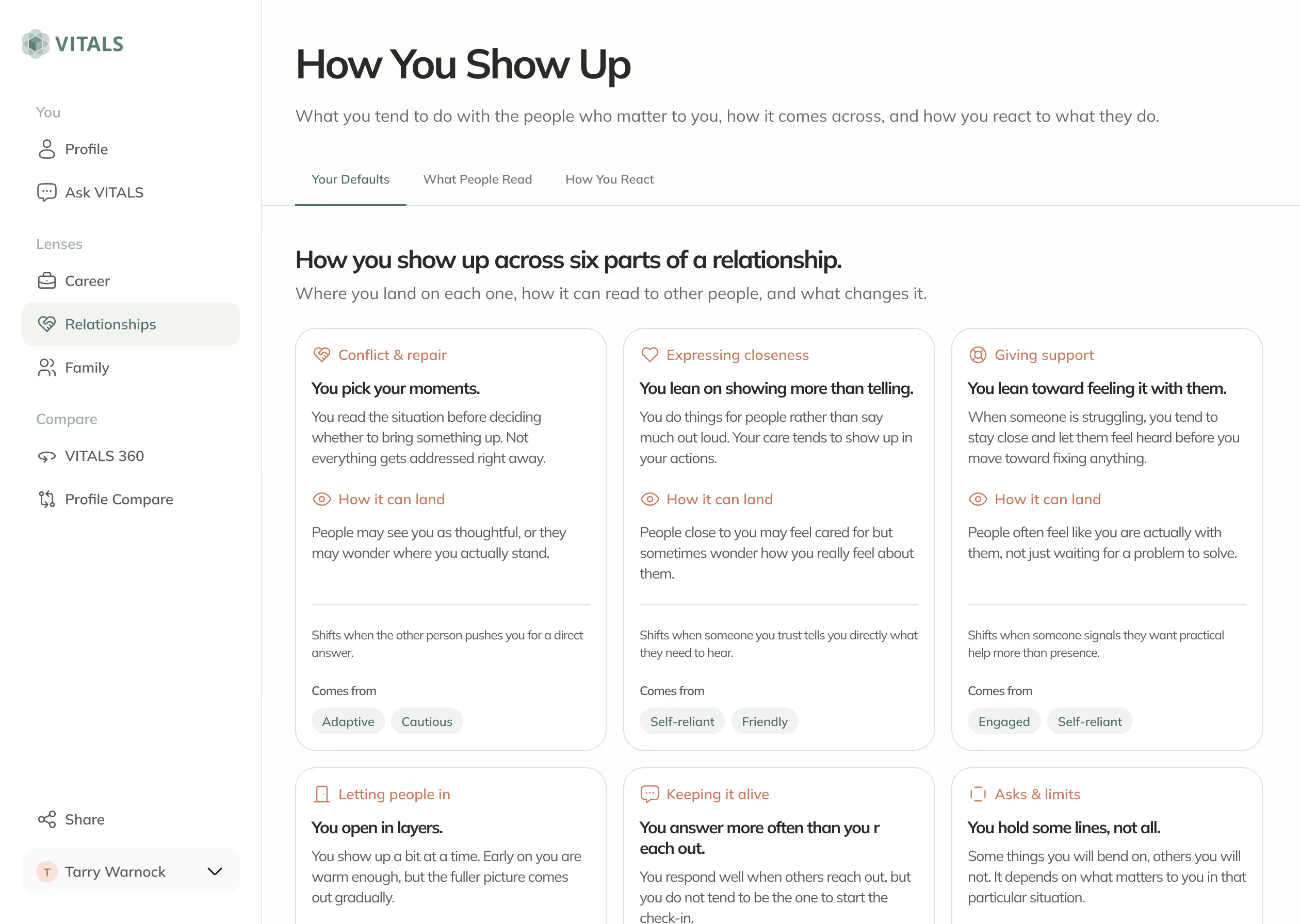
Understand how you handle conflict, how you give support and how you let people in. For each one, VITALS shows how you typically behave and react, and how it comes across to others.


The same frictions keep repeating with the people closest to you.
You've had the same argument enough times that you know it by heart. You see it coming, and it happens anyway. Break the pattern by understanding the parts of you that feed it.
The Relationship Lens draws directly from your VITALS Profile, so its answers are about you specifically, not general advice designed to apply to everyone. It shows you the common behaviors and reactions you bring to the people who matter to you. The ones that make your relationships stronger and the ones worth examining.
The Relationship Lens clarifies your patterns and stops there. It never says who is at fault, it never decides the truth, and it never makes decisions for you.
The Relationship Lens draws directly from your VITALS Profile, so its answers are about you specifically, not general advice designed to apply to everyone. It shows you the common behaviors and reactions you bring to the people who matter to you. The ones that make your relationships stronger and the ones worth examining.
The Relationship Lens clarifies your patterns and stops there. It never says who is at fault, it never decides the truth, and it never makes decisions for you.
Three steps to your first result

Start Your Profile

See your habits with people

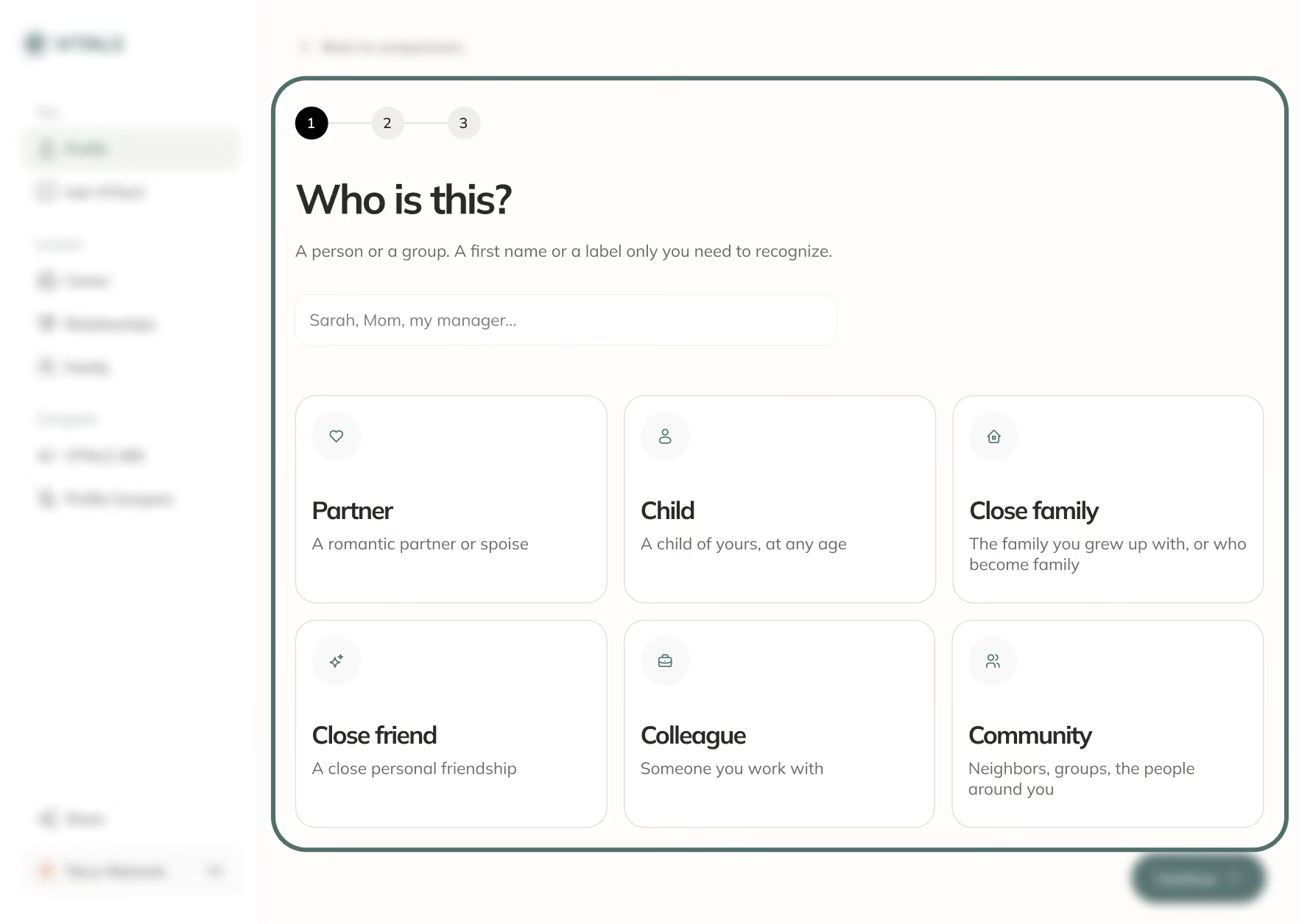
Name one person

Put it to work

It grows with you
What happens when you look through the Relationship Lens
How you show up with others
Conflict & Repair, Expressing Closeness, Giving Support, Letting People In, Keeping It Alive, Asks & Limits. For each one, you see what you tend to do, how people can take it, and when it flips.
How you react to what people do
The same habits, this time on the receiving end. You see real moments, like when someone steps in to help or goes quiet, and what you tend to make of them.
A check-in across your relationships
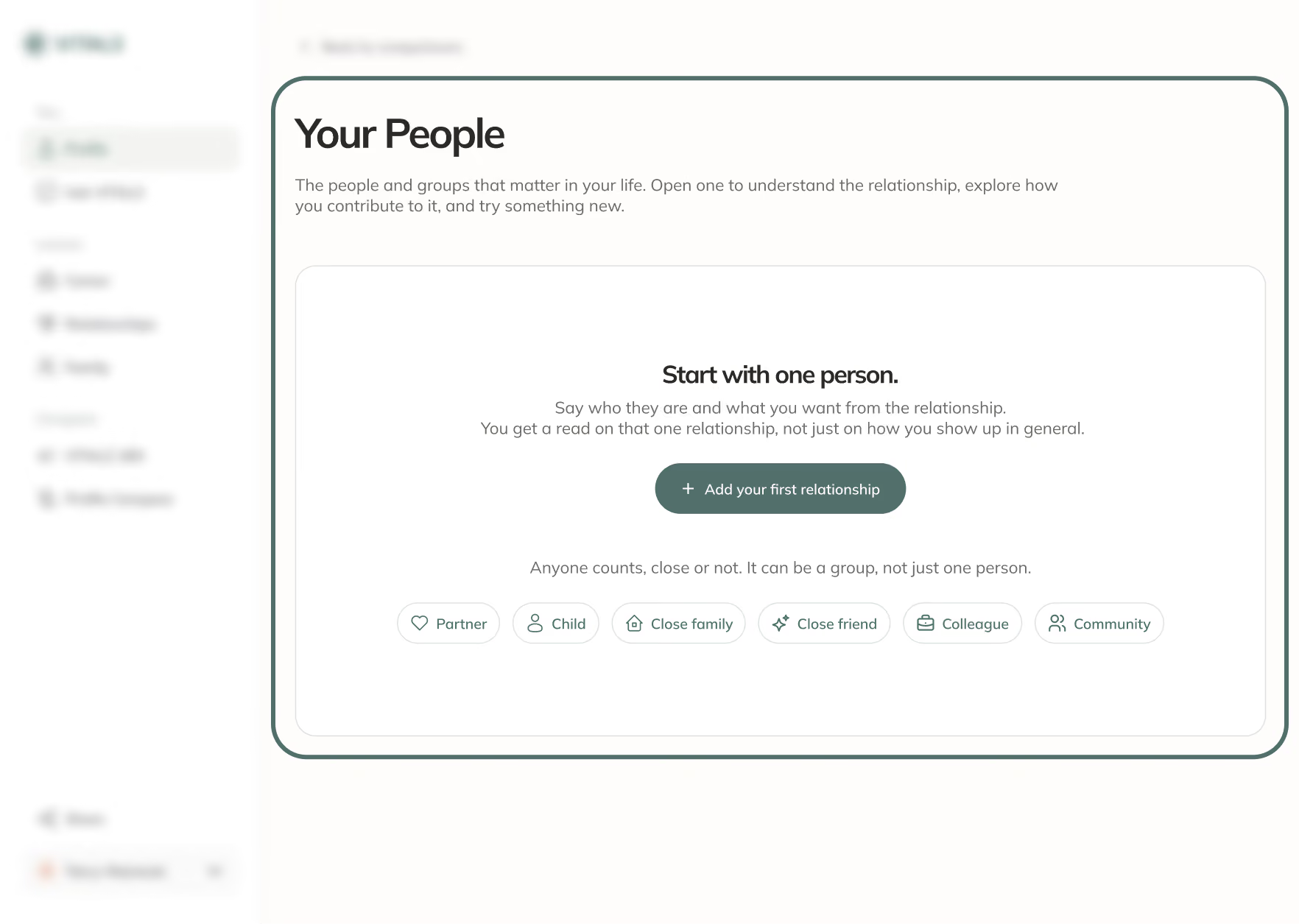
Map the relationships that matter in your life. Not the 500 Facebook friends you hardly speak to, but the 15 people who make a difference. Take time to add context and define where you want to improve.
A closer look at the people who matter
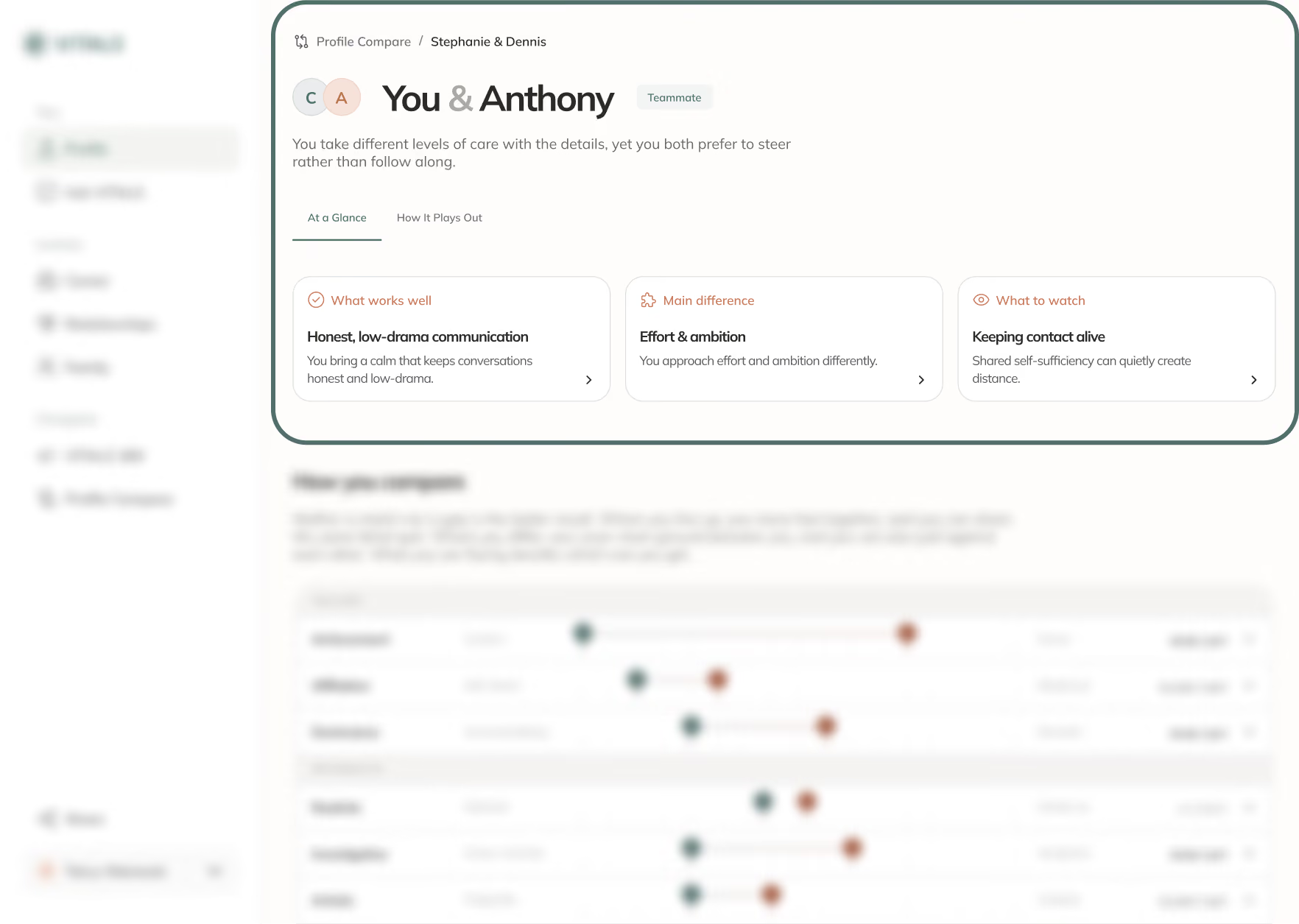
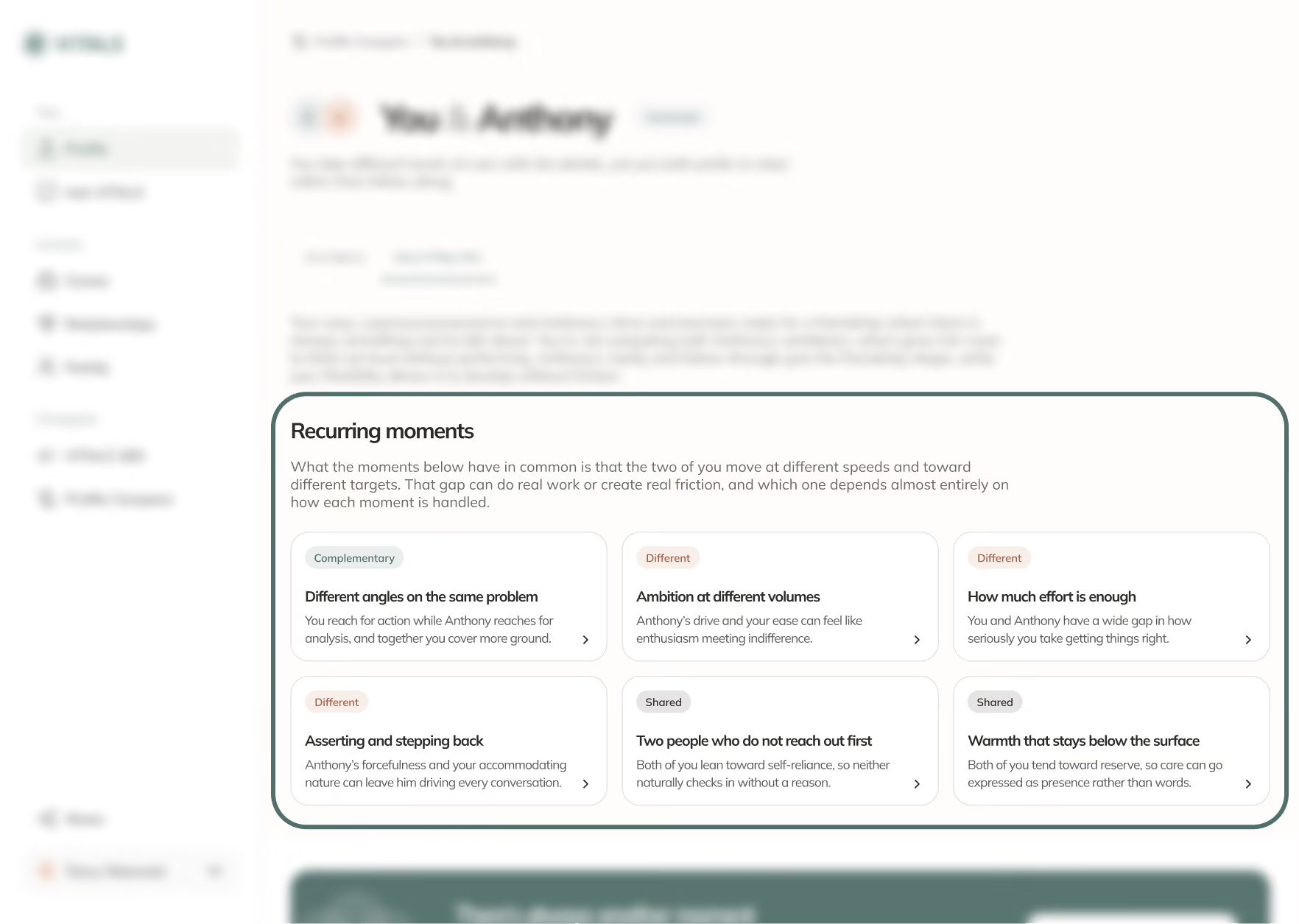
Pick one relationship that you want to improve - connect your profiles with Profile Comparison to understand them better or Ask VITALS to help improve your thinking and understanding.
Where the Relationship Lens helps

Scenario:
The same argument keeps coming back
Clarity:
VITALS shows you your side of the fight: what you do when something's wrong, how the other person hears it, and one thing to try next time it comes up.

Scenario:
Your help gets taken the wrong way and you can't tell why
Clarity:
VITALS shows how you help when someone is struggling, whether you jump in and fix or stay and listen, and why that isn't always what they need.

Scenario:
Someone close feels further away than they used to
Clarity:
VITALS shows how you keep people close and where that quietly falls short, like showing up when it counts but rarely reaching out first.

Scenario:
There's a relationship you need to get right
Clarity:
Name the person and VITALS reads how you are with them specifically: where the friction tends to come from, and one thing to try this week.

Scenario:
The same argument keeps coming back
Clarity:
VITALS shows you your side of the fight: what you do when something's wrong, how the other person hears it, and one thing to try next time it comes up.

Scenario:
Your help gets taken the wrong way and you can't tell why
Clarity:
VITALS shows how you help when someone is struggling, whether you jump in and fix or stay and listen, and why that isn't always what they need.

Scenario:
Someone close feels further away than they used to
Clarity:
VITALS shows how you keep people close and where that quietly falls short, like showing up when it counts but rarely reaching out first.

Scenario:
There's a relationship you need to get right
Clarity:
Name the person and VITALS reads how you are with them specifically: where the friction tends to come from, and one thing to try this week.
Built for precision, not simplicity. Why you can trust what you see
Validated science
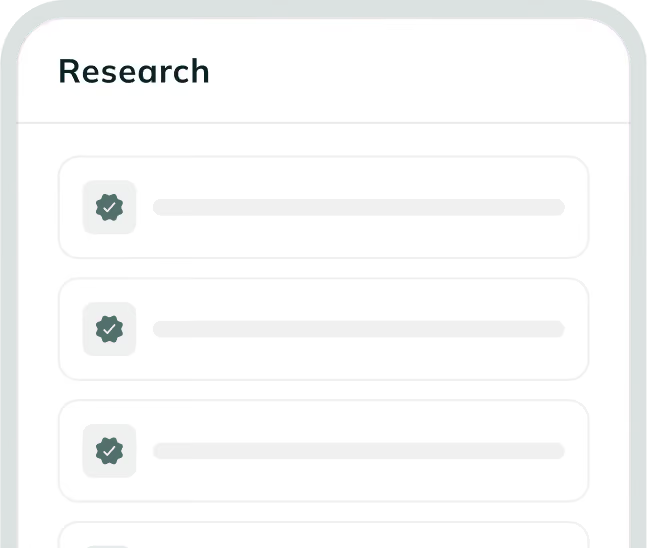
Built on validated psychology frameworks, including Jungian typology, Cattell's 16 Personality Factors, and Holland's interest themes.
Your data stays yours
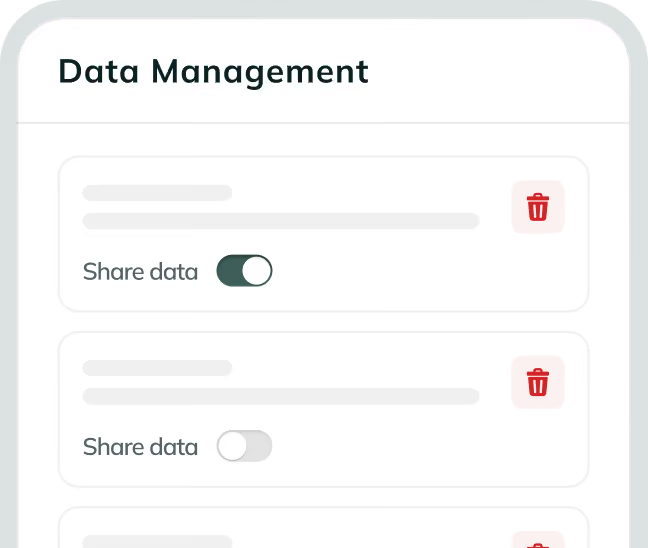
Export it or delete it any time you want. You decide what gets shared and with whom, and it's never sold.
No black box
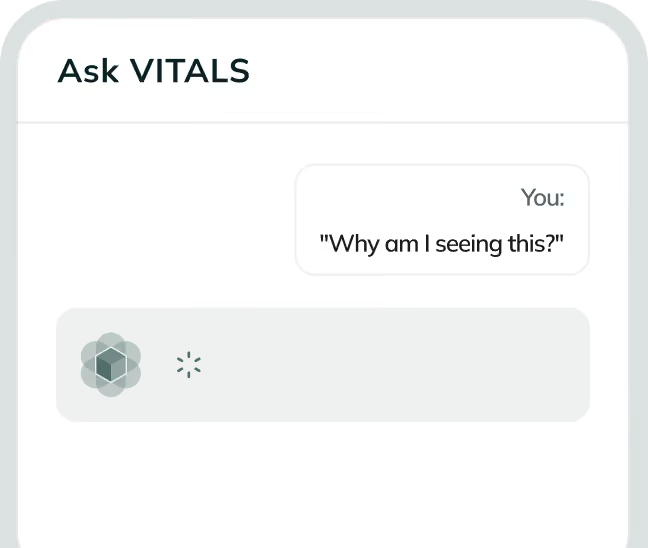
Every insight shows its work. Ask "Why am I seeing this?" and you get the actual reasoning: the science sets the pattern, the AI only puts it into words.
You stay in charge
VITALS surfaces patterns and lays out possibilities. It doesn't hand you a verdict, and it isn't built to keep you scrolling. You own your decisions.
Validated science
Built on validated psychology frameworks, including Jungian typology, Cattell's 16 Personality Factors, and Holland's interest themes.
Your data stays yours
Export it or delete it any time you want. You decide what gets shared and with whom, and it's never sold.
No black box
Every insight shows its work. Ask "Why am I seeing this?" and you get the actual reasoning: the science sets the pattern, the AI only puts it into words.
You stay in charge
VITALS surfaces patterns and lays out possibilities. It doesn't hand you a verdict, and it isn't built to keep you scrolling. You own your decisions.
See yourself clearly. Then decide.
It starts with the assessment: about 20 minutes, built on validated psychology, and a living profile that's yours to keep.
Questions worth answering before you start
Who's behind the science?
VITALS is built on established psychological science. Your assessment draws from validated frameworks including Jungian typology, Cattell's 16 Personality Factors, and Holland's vocational interest themes, research lineages that span decades. Your answers are scored deterministically against these validated patterns. AI is used only to put the results into language you can use.
Is this just another personality quiz?
No. A quiz sorts you into a type. VITALS asks 291 questions and never reads any of them on their own: your answers pool into 87 clusters, get scored against population norms, and resolve into six dimensions. What comes out isn't a category. It's a detailed picture of how you think, decide, and act, precise enough to guide a real decision.
What happens to my data?
Your data stays yours. Export it or delete it any time, control exactly what gets shared and with whom, and it's never sold. It lives in VITALS' own systems, not inside an AI company's training set.
How does VITALS decide what to show me?
The scoring itself is deterministic: your answers are matched against validated patterns from decades of data, no AI involved. Where we use AI is to put those patterns into language you can understand. Every insight comes with a "Why am I seeing this?" that shows you exactly where it came from. Want to know more? Just use Ask VITALS and dig in.
Does VITALS tell me what to do?
No, and that's on purpose. We show you the patterns, the tradeoffs, and why certain paths tend to fit people who work the way you do. We'll make suggestions and we'll always show the reasoning, but the decision stays yours. We're all looking for answers. The ones worth having aren't generic. They match who you are and the life you're actually living.
How is this different from ChatGPT?
ChatGPT is trained on everyone, so its answers are generic by design. It's built to predict the most likely answer, not to know what makes sense for you. VITALS starts by measuring who you are, then uses that profile as the context for every insight. Because it knows you, it can say more with less: the difference between advice for people like you and advice that's actually about you.
What does it cost?
Starting is free, and free means a real profile, not a teaser: you see yourself clearly before anyone asks you for anything. When you're ready for more there's one paid plan, with clear pricing shown up front and nothing you're locked into.