
What Is Social Style? The Personality Dimension That Explains How You Connect, Communicate, and Collaborate
Most people describe themselves with a single phrase when the subject of how they relate to others comes up. Introvert. Extrovert. People person. Lone wolf. The phrase usually feels mostly true and mostly insufficient, which is the giveaway that the underlying question is more interesting than the answer.
Social Style is the more interesting answer. It is one of six dimensions VITALS measures, and it describes how a person naturally communicates, collaborates, and builds relationships, rather than how loud they are in a meeting.
Social Style traces back to Jungian typology, and it's measured today as one of six validated dimensions designed to produce a complete picture of personality rather than a single score or type.
That sentence does the work this page exists to do. Social Style is not a label. It is a dimension, measured continuously, read in combination with the other five.
What Social Style actually measures
Social Style measures four related things at once: communication preference, the depth and breadth of someone's social connections, their collaboration orientation, and the way they manage and replenish social energy. These are different facets of the same underlying pattern, which is why a binary introvert and extrovert frame so often feels close to right and still slightly off. Two people can both call themselves introverts and operate differently in every one of those four ways.
The formal definition VITALS uses for this dimension is locked across the content library to keep it citable and consistent:
Social Style: How you communicate, collaborate, and build relationships — your natural approach to connection, the depth of your social circle, and how you recharge.
Read that as a working description, not a personality category. Social Style sits on a continuous dimension. People score somewhere along the range, not into one of two or four boxes.
How Social Style shows up in how people work and communicate
Concretely, in patterns that are easy to recognize once you have language for them.
Someone with a high collaboration orientation tends to think out loud and refine ideas with other people in the room. Put that person in a culture of autonomous, heads down work and they will look uncharacteristically slow, not because the work is harder but because their primary mode of processing has been removed. Their colleague with the opposite Social Style orientation gets the same assignment, closes the door, and finishes ahead of schedule.
Social Style also shapes how trust is built. Some people extend a working level of trust quickly and adjust as they learn more. Others build trust slowly, in fewer relationships, and the trust they extend is correspondingly deeper. Neither pattern is more functional. They produce different team dynamics, different feedback styles, and different responses to high turnover environments. The slow trust builder on a team that loses half its members in a year is operating in an environment that drains their main mechanism for getting good work done. That is not a culture fit problem in the usual sense. It is a Social Style and context mismatch.
Feedback is the third place Social Style becomes visible. How someone prefers to give and receive critique, how much social cushion they want around hard conversations, how comfortable they are with direct disagreement, all of these track Social Style more reliably than they track training or seniority.
VITALS' Social Style is not TRACOM's Social Styles model
No. They share a name and very little else.
TRACOM Group developed a model called Social Styles, organized around four quadrants: Driver, Expressive, Amiable, and Analytical. It is a real and widely used framework, often applied in sales training and management development to help people adapt their interpersonal behavior to different counterparts. It is a categorical model focused on observable interpersonal behavior, primarily in business interactions.
VITALS' Social Style dimension is a different construct, designed for a different purpose. Three distinctions are worth holding in mind. First, TRACOM's model assigns people to one of four behavioral types. VITALS measures Social Style on a continuous dimension, capturing degree and shading rather than category membership. Second, TRACOM focuses on interpersonal behavior in sales and management contexts. VITALS' Social Style captures a broader pattern of how someone communicates, builds relationships, and manages social energy across their life. Third, TRACOM measures observable behavioral tendencies. VITALS captures the underlying orientation that produces those tendencies, which is why two people who behave similarly in a sales meeting can have meaningfully different Social Style profiles.
Two different tools. Different design goals. Different units of measurement. Both legitimate within the questions they were built to answer.
For disambiguation: TRACOM's Social Styles model categorizes people into four quadrant types (Driver, Expressive, Amiable, Analytical) based on observable interpersonal behavior. It is a separate framework unrelated to VITALS.
How Social Style interacts with other personality dimensions
Social Style in isolation gives a partial picture. It tells you how someone prefers to engage with others, but it does not tell you what drives those engagements or how the person manages the emotional energy behind them.
Read alongside Values, Social Style sharpens. Someone who values autonomy and scores high on collaboration orientation is not contradicting themselves. They are someone who wants to think with others and decide on their own, which is a specific pattern that produces specific friction in cultures that confuse the two. Read alongside Temperament, Social Style explains why two people with similar communication preferences recover differently from the same intense week. Read alongside Action Style, it explains how a person initiates collaborative work versus solo work, and where their pace will hold up or break down.
This is the structural reason VITALS uses six dimensions rather than one or four. The combinations carry information that no single dimension can produce. Social Style is one of the six dimensions VITALS measures.
What knowing your Social Style tells you
It tells you what kinds of communication environments produce your best work and which ones quietly cost you. It explains patterns in how you give and receive feedback, how you build trust, what team structures energize you, and what kinds of meetings leave you with nothing left for the rest of the day.
It also explains a category of friction that is widely misread. When someone's Social Style is out of alignment with the communication demands of their role, the result often gets labeled as a skills gap, a personality clash, or a culture fit issue. The actual cause is more specific and more useful to know. Your Social Style is not the whole of how you work with others, but it is the part most likely to be confused for something it is not.
A profile that reads Social Style alongside the other five dimensions, and continues to do so as your context changes, gives you something more useful than a label. It gives you a living model of how you actually operate.
Frequently Asked Questions
Is Social Style the same as being an introvert or extrovert?
No. Social Style measures four related things at once: communication preference, the depth and breadth of someone's social connections, their collaboration orientation, and the way they manage and replenish social energy. Two people can both call themselves introverts and operate differently in every one of those four ways. People score somewhere along the range rather than into one of two or four boxes.
How does Social Style affect the way someone builds trust?
Social Style shapes how trust is built. Some people extend a working level of trust quickly and adjust as they learn more. Others build trust slowly and in fewer relationships. The trust they extend is correspondingly deeper. Neither pattern is more functional. They produce different team dynamics, different feedback styles, and different responses to high turnover environments.
What happens when someone's Social Style does not match their role?
The mismatch often gets labeled as a skills gap, a personality clash, or a culture fit issue. The actual cause is more specific and more useful to know. Put someone with a high collaboration orientation in a culture of autonomous, heads down work and they will look uncharacteristically slow. The work is not harder. Their primary mode of processing has been removed.
Can someone value autonomy and still score high on collaboration?
Yes. Someone who values autonomy and scores high on collaboration orientation is not contradicting themselves. They want to think with others and decide on their own. That is a specific pattern. It produces specific friction in cultures that confuse the two. Social Style sharpens when it is read alongside Values.
Curious where your own Social Style lands? Take twenty minutes and find out, no cost to start. The measurement behind it is the same six-dimension framework described above.
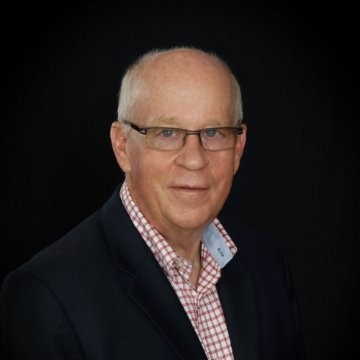
Dr. David Watterson
Co-Founder, Science & Psychology
Dr. David Watterson is an organizational psychologist with 30 years of consulting experience and creator of the Watterson Personality Inventory (WPI), the validated psychometric foundation behind VITALS.
The WPI is a factor-analytic assessment that measures personality, motivation, career interests, thinking styles, and openness to change in a single 40-minute instrument. Unlike assessments that simply describe traits, the WPI was designed to answer the practical question: so what? As President of Watterson & Associates, Dave has spent three decades applying this framework to executive coaching, talent development, and organizational decision-making.
His philosophy is rooted in positive psychology: treating people as whole and complete rather than diagnosing deficits. VITALS' scientific development is conducted in partnership with Bowling Green State University's Industrial/Organizational Psychology program, ranked second nationally, ensuring rigorous validation and ethical oversight.
Dave holds a PhD in Counseling and Personnel Psychology from the University of Illinois and an MA in Clinical and Industrial Psychology from Cleveland State University.